

How To Wrap & Press Hash Without Rosin Bags

Todde Philips
🇺🇸 Retired veteran, father, rock-climbing expert & rosin connoisseur.
Rosin pressing traditionally relies on pre-made bags with stitched seams to contain hash during extraction. While convenient, these seams create problems that compromise both yield and purity. Stitching creates larger holes at attachment points, often exceeding 25 microns even when the mesh itself is finer. Resin gets trapped in seam crevices or leaks through stitch holes, and the structural integrity around stitched areas remains inconsistent.
There's a cleaner alternative: wrapping hash using a single sheet of nylon mesh. This technique eliminates seams entirely while giving you complete control over filtration and containment. For hash makers chasing the cleanest possible results, learning this folding method opens new possibilities for precision pressing.
Why Seams Can be Problematic
Seamed rosin bags seem like the obvious solution for containing hash during pressing, but those seams create unexpected complications. At stitch points, the holes where thread passes through measure larger than the mesh's actual micron rating. A 25 micron bag might have stitch holes approaching 30 or even 40 microns, creating pathways for contaminants to bypass your intended filtration.
Resin accumulates in seam crevices where you can't recover it, representing pure waste with every press. The structural weakness around stitching creates pressure distribution problems that affect extraction efficiency. Stitched areas may fail under pressure or allow resin to escape where edges aren't perfectly sealed.
The folding technique using a single nylon sheet solves all these issues simultaneously. Uniform filtration across the entire surface, no weak points or structural compromises, and complete control over how tightly you seal your hash package.
Gathering Your Materials
You'll need a 6x6 inch sheet of 25 micron nylon mesh as your primary wrapping material. The size works well for typical personal pressing amounts, though you can adjust dimensions for larger or smaller batches. Keep a dab tool or small spatula handy for precisely placing hash and adjusting its position. Work on a firm, flat surface that gives you room to fold and manipulate the mesh. Optional parchment paper helps with handling if you prefer not working directly on your pressing surface.
Obviously, you'll need your rosin press ready to go once wrapping is complete. Make sure your plates are at your target temperature before you begin the folding process.
The Folding Technique
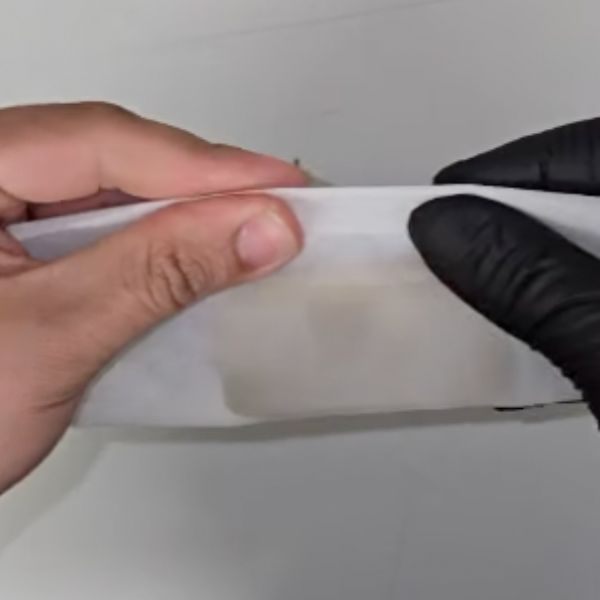
1. Start by placing your measured hash amount in the center of your nylon sheet. Spread it into a rectangular shape if possible, creating even distribution that will press uniformly. Avoid clumping all the material in one spot, which creates pressure imbalances and uneven extraction.
2. Make your first fold by bringing one edge of the mesh over to cover the hash completely. Here's the critical detail: offset the edges so one side extends approximately half an inch past the other. This uneven fold creates the foundation for your envelope structure and prevents material from escaping during pressing.
3. Take the longer mesh flap and fold it over the shorter one, closing the open end. This seals your primary escape route and establishes the basic envelope that will contain your hash throughout the pressing process.

4. Now address the side edges. Fold each side toward the center, one at a time, then fold over itself once more so you have two layers enclosing each edge. Press firmly at every crease using your thumbs to set the folds and create crisp, stable lines. The double folding provides extra resistance against the extreme pressures you'll apply during extraction.
5. You should now have two open flaps remaining at the left and right sides. Fold each flap over once, then fold again to double wrap these final openings. The goal is achieving two complete folds on each side, creating sufficient layers to withstand pressing pressure without allowing resin to escape.
Success Factors
Double folding at every potential escape point is non-negotiable. Single folds may look secure but often fail under pressure, allowing precious rosin to leak into areas where you can't recover it. The extra fold provides insurance against blowouts and ensures clean collection on your parchment.
Keep all folds tight and flat to avoid creating pressure imbalances during pressing. Loose or wrinkled folds create high spots that receive disproportionate pressure, potentially causing failures or uneven extraction. Each crease should be sharp and deliberately placed.
Quality nylon mesh with consistent micron rating throughout matters tremendously. Cheap mesh with variable pore sizes undermines the entire purpose of this technique. The Press Club's 25 micron nylon sheets are manufactured specifically for precision filtration, ensuring uniform performance across the entire surface.
Consider pre-pressing your wrapped hash gently before full extraction. A light pre-press shapes and stabilizes the package while helping you identify any folding problems before applying full pressure. This step takes seconds and prevents frustrating failures during actual pressing.
Why This Method Works
Eliminating seams produces immediately noticeable improvements in final product cleanliness. Without stitch holes allowing contaminants through, your rosin comes off purer with fewer particulates. The difference becomes obvious when you examine post-press residue and compare melt quality.

The wrapped filter is also easier to unwrap and inspect after pressing. You can clearly see extraction patterns, identify any weak points in your folding technique, and learn from each press. This feedback loop accelerates skill development and helps you refine your approach.
Perhaps most importantly, this method gives experienced hash makers complete control over their press. You're not limited by pre-made bag dimensions or seam placement. You can adjust wrapping technique for different hash textures, customize package size for varying amounts, and optimize every detail of containment and filtration.
Mastering the Technique
While rosin bags remain widely used and perfectly adequate for many applications, the folding technique offers a next-level option for hash makers committed to absolute quality. It's ideal for top-shelf bubble hash where every detail matters and contamination must be minimized.
The learning curve is steeper than simply loading a pre-made bag, but the benefits justify the practice required to master proper folding. Your first few attempts may be imperfect, but the technique becomes second nature quickly with repetition.
For hash makers chasing ultra-clean results and willing to invest time in perfecting their craft, pressing without seamed bags represents the current peak of rosin filtration technique.
Thoughts? Let us know by joining our secret Facebook group. Hang out with a community of like-minded solventless heads like yourself. Ask our head extractor questions, share your latest press and learn from hobbyists and experts in the industry.

Leave a comment
Please note, comments must be approved before they are published