

Invite-Only: Annual Humboldt Seed Company Pheno Hunt 2025 / The Hunt For Washers


Cannabis enthusiast and student of the art of solventless extraction
For those involved, this isn’t a casual farm tour. It’s a week-long, boots-on-the-ground evaluation of thousands of cannabis plants across multiple farms—an intensive search for rare genetic standouts that could define the next wave of cannabis cultivation.
At stake is more than bragging rights. The plants selected here may go on to become global seed releases, foundational breeding stock, or the next elite cultivars dominating hash menus and dispensary shelves. And increasingly, they’re being judged by a new standard: Not just how they grow.
Not just how they look. But how they wash.
A Living, Moving Laboratory Across Northern California
The Humboldt Seed Company pheno hunt doesn’t happen in a single greenhouse or controlled facility. It unfolds across a network of farms spread throughout Northern California—each one offering a different environment, cultivation style, and set of challenges.
Over the course of roughly a week, participants travel from site to site—through Humboldt County, Mendocino, and into the Sierra foothills—evaluating plants grown under full sun, mixed light, and varying soil conditions.
This mobility is intentional.
Cannabis genetics don’t exist in a vacuum. A plant that thrives in one microclimate may struggle in another. By testing the same genetics across multiple farms, breeders gain a clearer picture of how stable and adaptable a cultivar truly is.
On one farm, towering plants stretch above head height, their branches bending under the weight of resin-coated flowers. On another, tighter rows of smaller plants reveal different expressions of the same genetic line—more compact, more colorful, or more terpene-forward.
Each stop adds another layer of data, and each field tells a slightly different story.
Walking the Rows: Thousands of Plants, One Goal
The scale of the hunt is difficult to grasp until you’re in the field. Rows extend in every direction. Hundreds of plants per plot. Thousands across the full network of farms. Each one grown from seed. Each one genetically unique. Participants move slowly through the fields, stopping frequently—sometimes every few steps—to inspect a plant more closely. Conversations overlap: “Smell this one,”
“Check the node spacing,”
“Look at the head size on these trichomes.”
Hands brush against buds. Stems are rubbed between fingers to release terpene profiles. Loupes come out for closer inspection.
This is not passive observation. It’s active, sensory evaluation. The goal is to identify phenotypes that stand out immediately—but also those that reveal more subtle, long-term potential. Because in a hunt like this, the obvious winner isn’t always the true winner.
What Is a Pheno Hunt Really?
At its simplest, a pheno hunt is the process of growing many seeds from the same genetic cross and selecting the best-performing individuals.
But at the scale Humboldt Seed Company operates, it becomes something much more sophisticated.
Every seed planted represents a different combination of genetic traits. Even within the same cross, plants can vary dramatically in:
- Growth structure
- Flower density
- Terpene profile
- Resin production
- Environmental resilience
The hunt exists to explore that variation as fully as possible. Instead of guessing which traits might emerge, breeders let the plants express themselves—and then select the most valuable outcomes. Out of thousands of plants, only a handful will be deemed worthy of further development.
And sometimes, only one will truly matter.
The Shift Toward Resin-First Genetics
Historically, cannabis breeding revolved around flower. The priorities were clear: dense, photogenic buds, loud and recognizable aromas, high yields, and strong potency.
But as the cannabis market has matured, especially in California, consumer preferences have evolved.
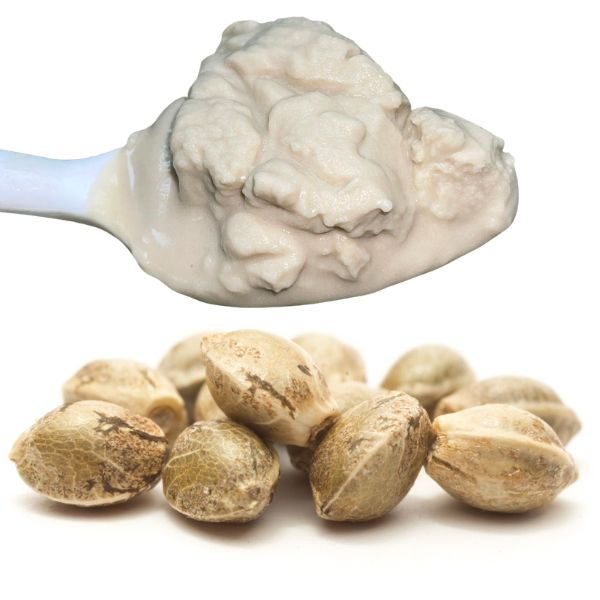
Solventless concentrates, particularly ice-water hash and rosin, have become some of the most sought-after products in the industry. And that shift has changed everything about how breeders evaluate cannabis. Today, the most valuable plants are not necessarily the ones that look the best in a jar. They’re the ones that perform the best in the wash.
The Rise of the Washer
In the language of modern cannabis, a washer is a plant whose trichomes detach easily during ice-water extraction and produce high-quality hash.
But that simple definition doesn’t capture the complexity of what breeders are actually looking for.
A true washer has a very specific type of resin:
- Trichome heads that are large and uniform
- Membranes that are strong enough to stay intact during agitation
- Stalks that release cleanly from the plant
- Resin that remains stable through drying and curing
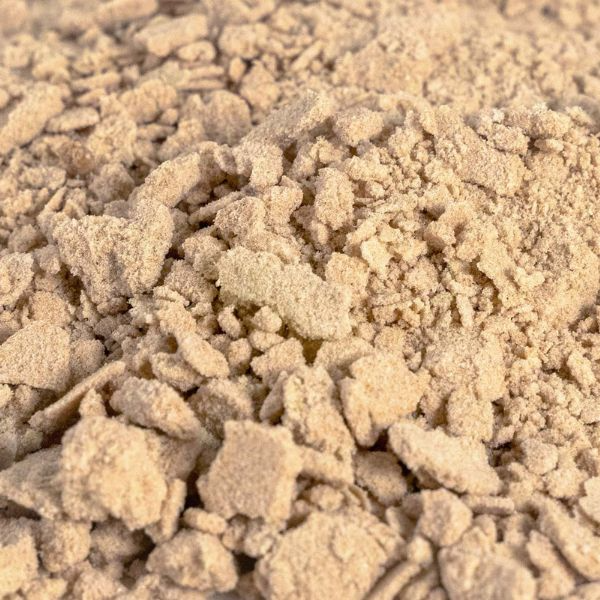
When handled, this type of resin often feels sandy or granular, rather than sticky or greasy. That texture is a clue. It suggests that the trichome heads are intact, which is exactly what hashmakers want. Because when trichomes rupture too easily, they smear across collection screens, lose terpene content, and degrade in quality. A plant can look incredibly “frosty” in the field and still fail as a washer. Which is why field evaluation alone isn’t enough.
From Field to Jar: The Moment of Truth
After standout plants are identified in the field, the next phase begins.
This is where things get real.
Small samples are taken and subjected to quick wash tests, sometimes referred to as jar tests.
The process is simple in concept:
Fresh plant material is agitated in ice water. If the plant is a good washer, the trichome heads will separate from the plant and sink, forming a visible layer of resin.
But what happens during that process reveals everything.
Some plants barely release any resin.
Others release resin, but it appears cloudy, broken, or unstable.
And then there are the rare ones.
The ones where the water fills with clean, intact trichome heads. This is resin that looks vibrant, structured, and full of life.
Those are the plants that make people stop and take notice.
Those are the ones that move forward.
The People Behind the Process
What makes the Humboldt Seed Company pheno hunt especially powerful isn’t just the scale—it’s the people involved.
This is not a closed-door breeding program.
It’s a collaborative effort that brings together a wide range of expertise including multi-generation Emerald Triangle farmers, professional hashmakers and extractors, cannabis breeders and geneticists, and industry educators and media.
Each group sees the plant differently.
A farmer might prioritize resilience and yield.
A breeder might look for unique terpene expressions.
A hashmaker is focused almost entirely on resin behavior.
These perspectives sometimes align—and sometimes conflict.
But that tension is valuable.
Because it ensures that the final selections are not just visually impressive, but functionally exceptional across multiple dimensions.
Genetics in Play: Hunting for the Next Standout
Each year, Humboldt Seed Company introduces new genetic lines into the hunt—crosses designed to push terpene expression, improve resin quality, and increase wash yields.
Recent hunts have included cultivars with names like Orange Creampop, Honey Bear, Blueberry Honey, Bubbles, and Puff Pastry.
These aren’t finished products.
They’re starting points as genetic experiments being tested in real-world conditions.
Some will show promise early but fail under closer scrutiny.
Others will quietly outperform expectations, especially once they hit the wash stage.
And a select few may emerge as true standouts, as the plants worth stabilizing, reproducing, and eventually releasing to the broader market.
Why This Hunt Matters More Than Ever
The importance of the Humboldt Seed Company pheno hunt extends far beyond a single event. It represents a fundamental shift in how cannabis is bred, evaluated, and ultimately consumed. Key impacts include:
1. Advancing Solventless Genetics. As demand for hash and rosin continues to grow, breeders need plants specifically optimized for extraction. This hunt accelerates that process.
2. Preserving Genetic Diversity. Large-scale hunts prevent the gene pool from becoming too narrow, ensuring a wide range of traits remain available for future breeding.
3. Real-World Testing. By using multiple farms, the hunt ensures that selected genetics are not just lab curiosities—they’re viable for commercial cultivation.
4. Bridging Culture and Science. The hunt blends traditional farming knowledge with modern extraction techniques, creating a more holistic approach to cannabis breeding.
The Final Selection: Finding the One
By the end of the hunt, thousands of plants have been reduced to a shortlist.
From that shortlist, only a handful will move forward.
And from that handful, perhaps only one or two will truly stand out as elite.
Those plants may go on to become new seed releases, core breeding stock, or widely cultivated commercial strains.
Or they may remain exclusive, circulating quietly among breeders and hashmakers.
But regardless of their final destination, their impact can be significant.
Because in cannabis, everything starts with genetics.
The Future of Cannabis Is Being Selected Right Now
The Humboldt Seed Company pheno hunt offers a rare glimpse into the frontlines of cannabis evolution.
It shows how the industry is shifting—from aesthetics to performance, from flower to resin, from hype to functionality.
And it reinforces a simple but powerful idea:
The best cannabis isn’t always the loudest, the prettiest, or the most hyped.
Sometimes, it’s the plant that reveals its true value only after it’s been washed, pressed, and transformed.
Somewhere in those Northern California fields, among thousands of plants, that future is already growing.
It just takes the right people—and the right process—to find it.
Thoughts? Let us know by joining our secret Facebook group. Hang out with a community of like-minded solventless heads like yourself. Ask our head extractor questions, share your latest press and learn from hobbyists and experts in the industry.

Leave a comment
Please note, comments must be approved before they are published