

Why Does My Rosin Bubble When It's Heated?

Todde Philips
🇺🇸 Retired veteran, father, rock-climbing expert & rosin connoisseur.
You heat up a dab of rosin and watch it come to life with tiny, energetic bubbles. It almost looks like champagne fizzing up from the bottom of your bowl. This bubbling is totally normal and often, it’s a sign of quality. But what's actually happening? And why do some samples bubble more than others?
Let’s find out what causes that signature sizzle and what it tells us about your rosin.
Chemistry in Action
That bubbling effect has a nickname among hashmakers: champaigning. It refers to the gentle boiling and bubbling you might notice when rosin is heated on a nail or inside a jar at room temperature over time. While it might look like some kind of reaction or impurity, this bubbling is actually a combination of natural processes tied to the composition of the rosin itself.
Two main factors are at play here: terpene volatility and decarboxylation.
Terpenes on the Move
Many of the bubbles you see are a result of terpenes and light hydrocarbons vaporizing under heat. These are aromatic compounds found in the cannabis plant that contribute to flavor, aroma, and therapeutic effect.
Terpenes are incredibly volatile. Some of them begin evaporating as low as 100°F, while others need higher temperatures in the 200–300°F range to fully release. When you introduce heat during a dab, the terpenes start to lift off and release into the air. This action creates bubbles within the rosin as those volatile compounds make their exit.
If your rosin is loaded with terpenes you’re more likely to see this bubbling effect. It doesn’t mean anything is wrong, quite the opposite. It often means the rosin was well made and still contains a rich terpene profile.
Decarboxylation: THCA Turning Into THC
Now let’s talk about another key reason your rosin bubbles when it’s heated: decarboxylation.
Most solventless rosin contains a significant amount of THCA, which is the non-psychoactive acidic precursor to THC. When you apply heat, THCA undergoes decarboxylation. This is a chemical reaction that removes a carboxyl group (–COOH) from the molecule, turning THCA into psychoactive THC.
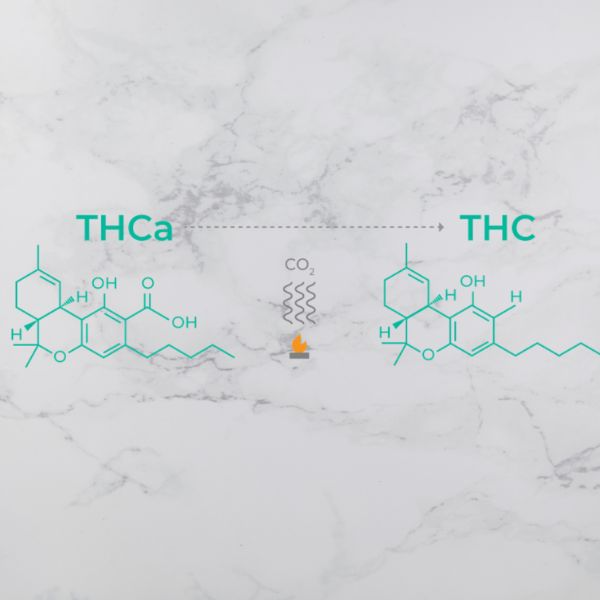
Here’s the part that creates bubbles: when that carboxyl group is removed, it’s released as carbon dioxide gas (CO₂). That gas builds up and escapes through the surface of the resin, causing bubbling.
So if your rosin bubbles aggressively on the nail, it might be undergoing decarboxylation right before your eyes.
Temperature Plays a Big Role
Not all bubbling is created equal. The behavior of your rosin under heat will depend heavily on the temperature.
- Low-temp dabs (under ~500°F): More terpene bubbling, less decarb
- Mid-range temps (~500–600°F): Terpenes and CO₂ bubbling from decarb
- High temps (over 600°F): More aggressive bubbling and potential degradation
It’s also worth noting that the longer the rosin sits under heat, the more it can degrade. Extended exposure to high temps can convert THC into CBN, a less psychoactive cannabinoid associated with sedative effects.
Bubbling Doesn’t Mean It’s Dirty
One of the most common misconceptions is that bubbling means your rosin contains impurities. That’s not usually the case.
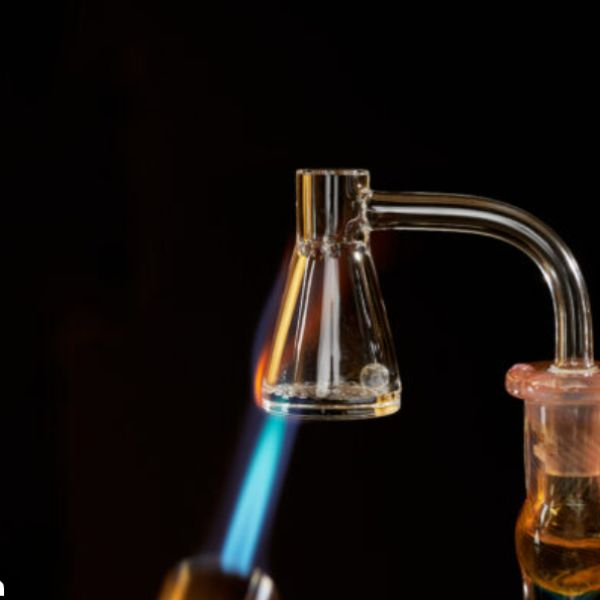
Clean, high-quality rosin with a strong terpene profile and a high THCA content is often more likely to bubble. It means there’s more going on inside the resin. Of course, if the rosin is sputtering violently or you hear crackling, that could suggest residual moisture or improper storage. But subtle, even bubbling? That’s expected, and often desirable.
To really understand the difference, experience is key. If the bubbling is paired with off-smells, discoloration, or odd textures, it may be worth revisiting your processing or curing methods. But in most cases, especially with well-made hash rosin, it’s just nature doing its thing.
Conclusion
When rosin bubbles in your bowl you’re witnessing terpene volatility and decarboxylation in action. These processes bring out the flavor, potency, and aroma that make solventless concentrates so special.
If you’re seeing bubbles in your jar or in your bowl, you can appreciate the fact that rosin is alive with chemistry and crafted with care.
Thoughts? Let us know by joining our secret Facebook group. Hang out with a community of like-minded solventless heads like yourself. Ask our head extractor questions, share your latest press and learn from hobbyists and experts in the industry.

Leave a comment
Please note, comments must be approved before they are published